Consequential Events - Wakefield RI - 1971 - 1978
We all have consequential events in our lives which tend to define us at some level. Often these consequential events involve moments of intense emotions which make remembering them easier especially as we age.
I have been reading a good bit lately and some of the books have been about consequential events in the lives of the authors. I am making a distinction between people who write about consequential events but have not actually experienced the events they are writing about. Most historians fall in this category. Jean and I have often used our time in the "coffee shop" to review our lives and look at the events that have made us who we are. Some of those events can best be described as consequential in their impact on our lives. Our shared experiences around the Vietnam War certainly have had a huge impact on who we have become. Facing the memories of those days has been, at times, difficult and has required us to come to grips with those realities as best we can in an honest, and objective way. Sharing those stories has helped each of us deal with our past. Some of the consequential events have been happy times, but many have been difficult times in our lives.
I think we all have a need to "tell our stories," and we look for opportunities to do that. Sometimes that takes the form of writing about the events which can be a cathartic exercise.
The six years we lived in Wakefield Rhode Island may be viewed by our children as an "ideal" time in their lives and for that, Jean and I are grateful. It is unlikely that any of them were fully aware of the full extent of the challenges Jean and I were facing and what we as a family had to deal with. They were truly "consequential" times for us.
In the fall of 1971, I applied for a position at the University of Rhode Island in the ROTC Department. At that time the Army had a program that allowed officers to go on "permissive" temporary duty (TDY) to pursue a master's degree which would be followed by an assignment as an ROTC faculty member, usually at the same university. The "permissive" TDY allowed me to receive my full-pay and allowances and I could use my GI Bill to pay for tuition and books. I found out that there would be an opening at the University of Rhode Island that I could apply for. I knew I was going back to Vietnam for my second tour, but I was optimistic that the war was winding down and I would not have to serve a full tour.
First, I had to apply for entry into a master's degree program and then get approval from the current Professor of Military Science (PMS) to be selected for the open slot once I completed my degree. Since my undergraduate degree was in Sociology, I applied for entry into the master's program offered by the Sociology Department at URI. The chair of the Department was Dr. William "Bill" Rosengren. After submitting my application, I received a "conditional" acceptance. My undergraduate academic record was not strong but I was thrilled to get a chance. The PMS was Colonel Bates who reviewed my military record and approved me for the position. I did not know at the time that one of my La Salle classmates, Army Captain Mike Pearson had also applied for the ROTC position. Mike's father was a real-estate developer and very influential in RI. Mike's older brother, Roger, was a star URI athlete. Mike's father tried to put pressure on COL Bates on behalf of his son. COL Bates told me about this and said when he reviewed both of our military records, he thought I was the best candidate and was not going to be pressured by anyone to change his mind. Before I even got to Vietnam, I had orders to attend URI for my master's degree with a follow-on assignment to the ROTC Dept.
When I finally arrived home in December of 1972 after a full one-year tour, Jean had already bought the house at 61 Kenyon Avenue in Wakefield RI and moved the family in. I started classes in January of 1973. While attending graduate school I was cautioned not to let anyone know that I was a Vietnam War veteran and an active-duty Army officer. It was a grueling academic experience for me, but I was able to do very well. I wore civilian clothes the entire time I was attending classes. There were clear indications that many students and faculty were strongly opposed to the Vietnam War, and I was glad I had heeded the advice not to reveal my status.
In the Spring of 1974, I had completed all my course work by taking summer classes, and all that remained for me was to complete my thesis. In the Spring, Jean and I attended a party at the home of one of my professors, and we were confronted by one of my fellow students about my military service and my Vietnam War experience. I wrote about this experience in a previous "Family Stories" piece called "Dark Times." In that same article I talked about some of my experiences as an ROTC faculty member.
In early May of 1974, on a Saturday morning, when I got out of bed, I was struck by severe back pain and fell back into bed. That started me down a very difficult time in my life. It was without a doubt one of the most consequential events of my life. Ironically, after surviving two tours in combat without being injured, I was faced with a serious injury. I was trying to complete my master's degree thesis and so I rigged up a typewriter on an ironing board in my study so I could continue to type.
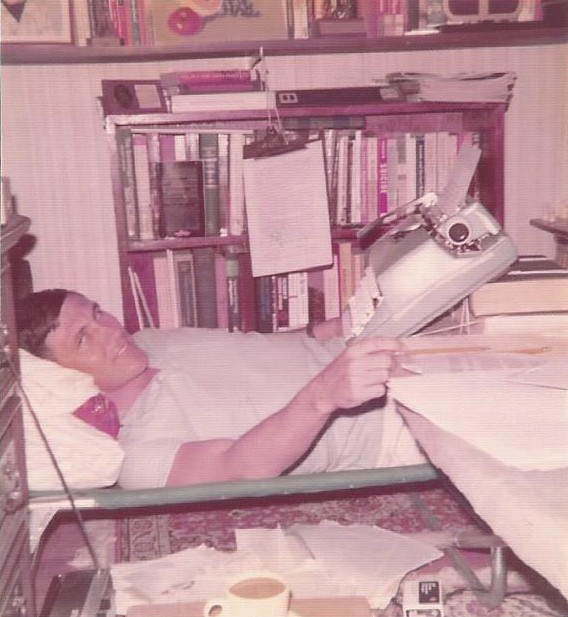
I was doing my statistical analysis at that time, and I had to use the mainframe computer at the college. I had to key punch "job cards" which could be then read by the computer in order to get a statistical report on the correlation of my variables in the data. I would drive over to the campus in our station wagon at night by putting the front seat all the way back and as flat as I could make it. I had a bag I could put over my shoulder to carry my box of job cards in and when I got into the computer room, I would put two chairs together and lay on my stomach which allowed me to key punch the cards I needed and then set them up for a run on the computer. When the computer completed the run, it would print out the results on wide paper which I would put in my bag to carry home so I could analyze the results. This was a very painful and laborious task for me.
At that time, I would often crawl around the house because I could not walk and I had to crawl when going up the stairs. At one point one of the children asked what was wrong with Daddy, and Jean said I had an injury but it would be ok.
In my early career I had been a paratrooper and remember landing hard a few times, but I did not think anything of it at the time. In each case, I was able to move through the pain and continue to function without any intervention. On my first tour in Vietnam, I was shot down and landed hard when we crash-landed on the Ho Chi Minh Trail in Laos. Again, I felt back pain but just pushed through it. I do not know if those events were the set-up for what happened to me that Saturday morning; all I know is that I was in extreme pain and could not shake it. I felt sure it would pass, but I went to see a doctor at the South County Hospital. After assessing me, he said I had a serious back injury involving a disk that would probably require hospitalization for some period of time. My only option was to go to the Naval hospital at the Newport Naval base. I was very concerned about the impact the injury would have on my graduate work and my long term military career.
I was admitted to the hospital and put in traction for about a week. The traction did not work so the orthopedic doctor decided he would have to do surgery. During this time Jean would come to the hospital daily to check on me. She did not bring the children until later.
One of the men in the room I was in was a Naval Officer we called "Uncle Ralph." When he was well, he would come back to visit and take our children out for ice cream and entertain them while Jean visited me.
I had back surgery in early June. Unfortunately, it did not relieve the pain for me. Jean visited daily. One day, not long after surgery, she visited me and could not wake me up. I was laying on my back in bed. She went to the nurse's station and asked what medication I was on that would account for her not being able to wake me up. When they said 25 milligrams of a pain medication called Demerol, she said that was a child's dose and that would not explain my condition. When she went back into the room, she turned me over and saw that the bed was full of my blood. She immediately got the nurses to come in and start me on a blood transfusion. To this day we both know Jean saved my life that day. If she had not come or did not know to turn me over, I would have most likely bled to death.
At one point, the Navy doctors wanted to redo the surgery on my back. At that time, we did not know that, in the surgery, the orthopedic surgeon had gone into three levels of my disks but had not found the cause of the problem. Jean was adamant that she did not want them to operate on me again. She asked if she could take me out of the hospital and they agreed that if I could show that I could walk they would give me a temporary pass so I could go home. At night, I started rolling out of bed and practicing walking short distances before collapsing back into the bed in pain. Eventually I could show the doctor that I could walk and they let me go home. Jean had set up an appointment with a neurosurgeon at Rhode Island Hospital and took me to see him. He assessed me and said the surgery had to be done again if I had any hope of walking again.
Desperate times for Jean and me. Fortunately, the children were unaware of the severity of the situation. They could have done nothing and did not need that kind of stress in their lives.
At that time, June of 1974, a new Professor of Military Science had come to the ROTC Dept. at URI. LTC James E. McKeon arrived from Washington DC. His deputy was MAJ. Walt Shugart who knew about my condition at the hospital and he told Jim that I was in desperate need of help. I did not know it at the time, but Walt had intervened when the previous PMS COL Carter was trying to replace me. Walt Shugart was not only a great friend; he was my advocate. LTC McKeon knew a lot of folks in the Pentagon and was able to arrange an Air Force medevac flight to come to the Providence airport to pick me up and bring me to Walter Reed Hospital in D.C. Jean was allowed to come with me and my sister Teresa took all four of our children into their home while Jean was in DC.
LTC James E. McKeon (the rest of the story) Jim got himself assigned to the PMS position at URI through contacts he had in DC. For him it was going to be a terminal assignment before retiring from the Army. He had a home in Wolfeboro New Hampshire on Lake Winnipesaukee and his wife and children lived in a large home overlooking the lake. We met his wife and family one time when we stayed at his house after a very unpleasant trip in the Hamilton's popup camping trailer. I believe his wife was much younger than Jim and my memory is that she was quite attractive. His mother and sister were longtime residents of Wolfeboro and he also owned a bank there.
While assigned as the PMS at URI he lived across the bay at the Newport Naval Base. He lived in bachelor's quarters on the base and would drive to Wolfeboro on the weekends. My memory is that he spent a lot of time in Wolfeboro and that Walt Shugart pretty much ran the department in his absence.
Jim smoked cigars almost constantly and I believe he drank too much alcohol. My memory is that his hands shook almost constantly which may or may not have been caused by alcohol. I liked Jim and will always be thankful for what he did for me. He died in Wolfeboro on December 27, 1986 and is buried in a cemetery there. He was 49 years old.
Walt Shugart (the rest of the story) Major James Walter "Walt" Shugart III was the deputy PMS at the URI ROTC Department while I was assigned to the unit. When I met Walt, I was in my graduate program. When I was in the Newport Naval Hospital he would come visit me. He was a very devout Christian who had converted to Catholicism when he married Shirley. He graduated as an ROTC student from Washington and Lee University in Virginia. He entered the Army as a regular officer in the Infantry. He met his wife Shirley when he was a Lieutenant and assigned to a unit in Germany. Shirley was a teacher in one of the Department of Defense schools in German. They had two boys and a girl, David, Gregory and Julia.
Walt served two tours in Vietnam and earned the Silver Star for heroism during the very intense Battle of Suoi Tre in March 1967. The memories of that battle carried many ghosts for Walt that did not go away until he finally wrote about the event. Walt joined a writing class on how to write a memoir in 2015 and used the time to write his story about the battle. It is intense reading. He let me read it. I have put a link below to his story which is in the memories book of my website.
The Battle of Kontum - Memories Book - Walt Shugart - The Battle of Soui Tre
When Joe Bolton went to Canada in March of 2026, he met Bill Comeau who wrote a book about that battle, "DUEL with the DRAGON at the Battle of Suoi Tre." Joe purchased a copy of the book and had the author inscribe it to me.
Walt organized reunions for his unit that fought in the battle, the "BRAVO REGULARS" Bravo Company 3rd Battalion 22nd Infantry. While we were in Chester VA, Walt organized a reunion for his unit at Fort Lee VA. We have a link to that site on Walt's Memory Book page.
Walt's last assignment, before he retired as a Colonel, was as the senior advisor to the Virginia National Guard. He lived in Midlothian Virginia. Walt was a member of the Brandermill Rotary Club and he sponsored me as a charter member into the Chester Rotary Club. We remained good friends and sometimes played golf together.
Walt had Type I diabetes and died on October 26, 2017. He was 78 years old when he died and he and Shirley had been married for 53 years. He was a good man and will be missed by all who knew him.
When I arrived at Walter Reed, I was put back in traction for another week. I was in a large ward with more than 20 other back injured patients of all ranks. Jean got a place to stay in the guest house. Jean's aunt Florence and her sister Jeanette drove to DC to help Jean. They would pick her up and drive her to the hospital every day and take her out to eat. They were little angels for Jean. After a week in traction without good results the decision was made to operate on my back. Jean and I knew that was probably the only hope I had. The night before the surgery three doctors showed up at the foot of my bed and said they would be doing the surgery and only gave me a 50% chance of ever walking again.
After the surgery, while I was in the recovery room, one of the nurses started cranking up the hospital bed to an upright position. As the bed went up, I was terrified that the pain would hit me but to my great relief the pain did not come back. I felt the pain of the surgery which was minor compared to what I had gone through. I was thrilled and started shouting "no pain, no pain."
When I was leaving the hospital, I was told that I would have a physical "profile" which would limit my activities and what assignments I might have. I was told I would not be able to run or stand for too long. When I got back home, I immediately started my own physical therapy program to get my body back. Since it was summertime and the ROTC cadre were all at the Fort Bragg summer camp, I was able to use my time to recover my physical abilities. At first, I went to the University swimming pool and started a swim program to build myself up. Within a few weeks, I was able to run short distances. I knew that when the school term started in September, I would have to pass an Army physical fitness test. Eventually I was able to run at least two miles and do pushups and sit-ups. There was pain but nothing too bad. When the unit returned in September, I began my duties as an ROTC instructor teaching Freshman students military history along with other ROTC subjects.
During the fall I finished my thesis and defended it. I was able to graduate in January of 1975. When I got assessed by a military doctor my profile was reduced to having only one restriction. I was restored to flight status but I was not allowed to fly any ejection seat aircraft. The Army only had one ejection seat aircraft at that time, and I was not checked out in it.
In April of 1975, South Vietnam fell to the North Vietnamese Communists. Jean and I were heart sick and with prayer, decided to take in Vietnamese refugees. That story is told at another place on the Family Stories Page.
Every summer I was required to go to Fort Bragg to participate in the summer camp for our students. It was a difficult time for Jean to be left alone once again with the four children. At that time, she started an academic program with Salve Regina University to complete a bachelor's degree in nursing. She was able to test out of some of the class requirements but had to travel all over the state to attend the classes she needed. Having a presence of the Vietnamese in the house added to her stress during that time. Fortunately, we were close to family and the children enjoyed living in Wakefield and did well in the schools they attended. We all have happy memories of family times at the beach and events in our home.
When my assignment with the URI ROTC program was ending in the summer of 1977, Jean had not yet completed her course work and needed one more semester. To our amazement, I was notified that I was one of five Army officers selected to attend the Naval War College which was a one-year program. I had not requested that assignment. That provided the time Jean needed to graduate from her program, which she did and graduated with honors in January of 1978.
The Naval War College was an academic grind for the students, but my URI graduate work prepared me well and I graduated with honors in the summer of 1978. During that final year in RI, we were involved with Mark Walstead. His story is on the Families Stories Page.
In the early Spring of 1978, I received orders to Alaska which was my follow-on assignment after the War College. It was a shock to all of us, and Jean was greatly concerned after hearing stories about the bitter cold of Alaska. We decided to make the best of it and after exploring different options to include a weekend trip to New Hampshire in John and Marilyn Hamilton's popup trailer camper, we purchased a 28-foot Class A motorhome to make the trip to Alaska.
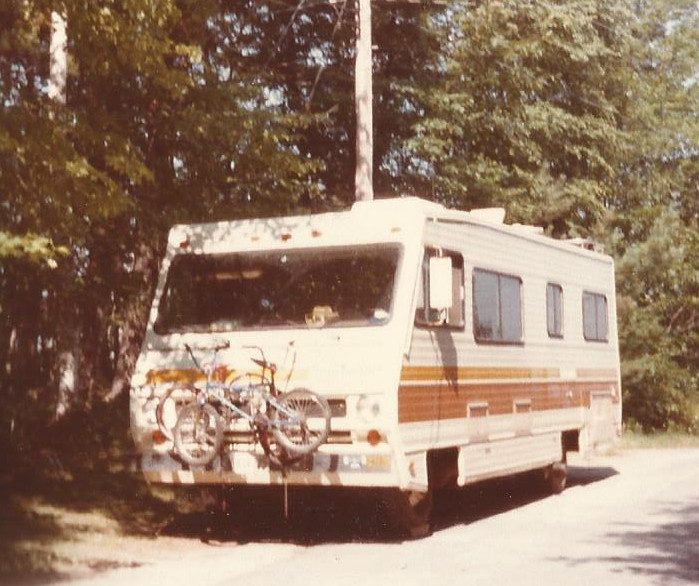
We saw it as an adventure for all of us. On the way to Alaska, I had to attend a "New Commanders Course" at Fort Rucker AL along with a flight refresher course. We were able to keep our motorhome in the driveway of Gene and Nancy Pawlik who were good friends of ours. Almost every weekend we would drive the motorhome to lake Eufaula to give the Pawlik's a rest and to have a nice family outing. We had pulled a little red Vega station wagon down to Fort Rucker with us which I used for my daily commutes to the post. When we left, I was able to sell it to a local dealer for about what I had originally paid for it.
While at Fort Rucker my orders were changed several times before the final orders which were for us to go to Hawaii. It was a time of considerable stress on Jean and me. We took the motorhome to Seattle Washington and visited Jean's twin sister Joan and her family. I learned that the Navy had a program called "Opportune Lift" which allowed us to put our motorhome on a Navy ship on space available and they would ship it to Hawaii. The Navy took no responsibility for the vehicle and if they had to go to war, they said they would just push it over the side.
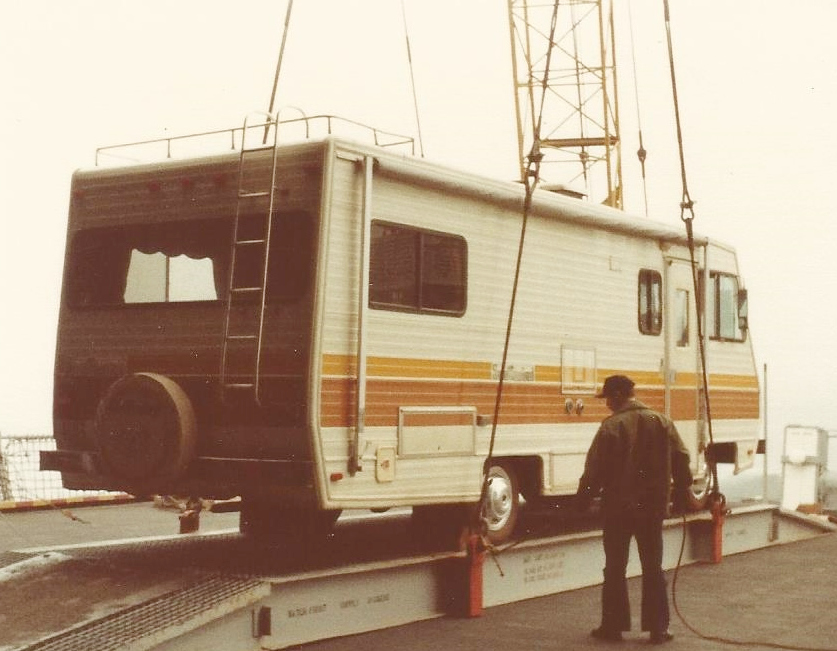
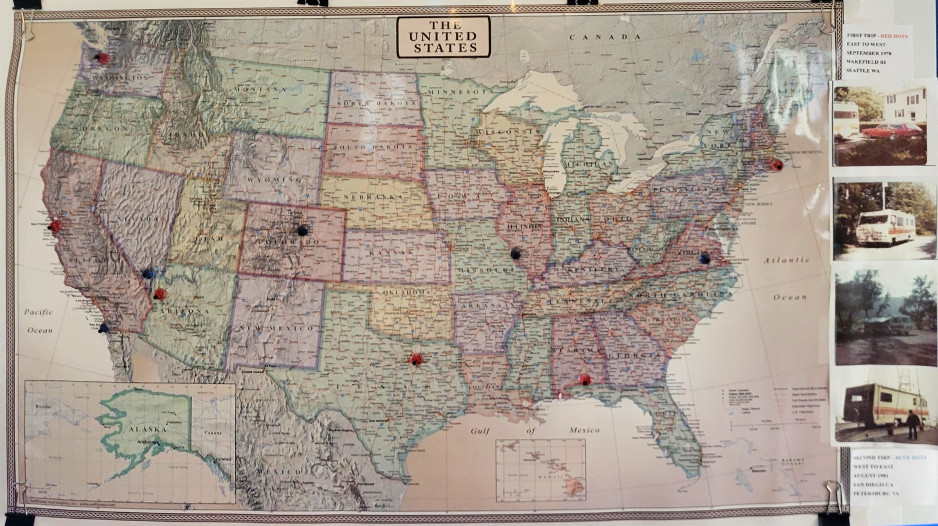
Our three years in Hawaii and my three different assignments while there was also an amazing story. The memories of time in the motorhome, in Hawaii, and the many visitors we had have provided wonderful memories for all of us.
The many very consequential events of this period provide vivid memories for Jean, me and our children. As we reflect back on those days, we can see the many times God brought us through the storms and the many "angels" that helped us along the way. We are grateful that we came through it all with our family intact and with incredible memories of a life lived.